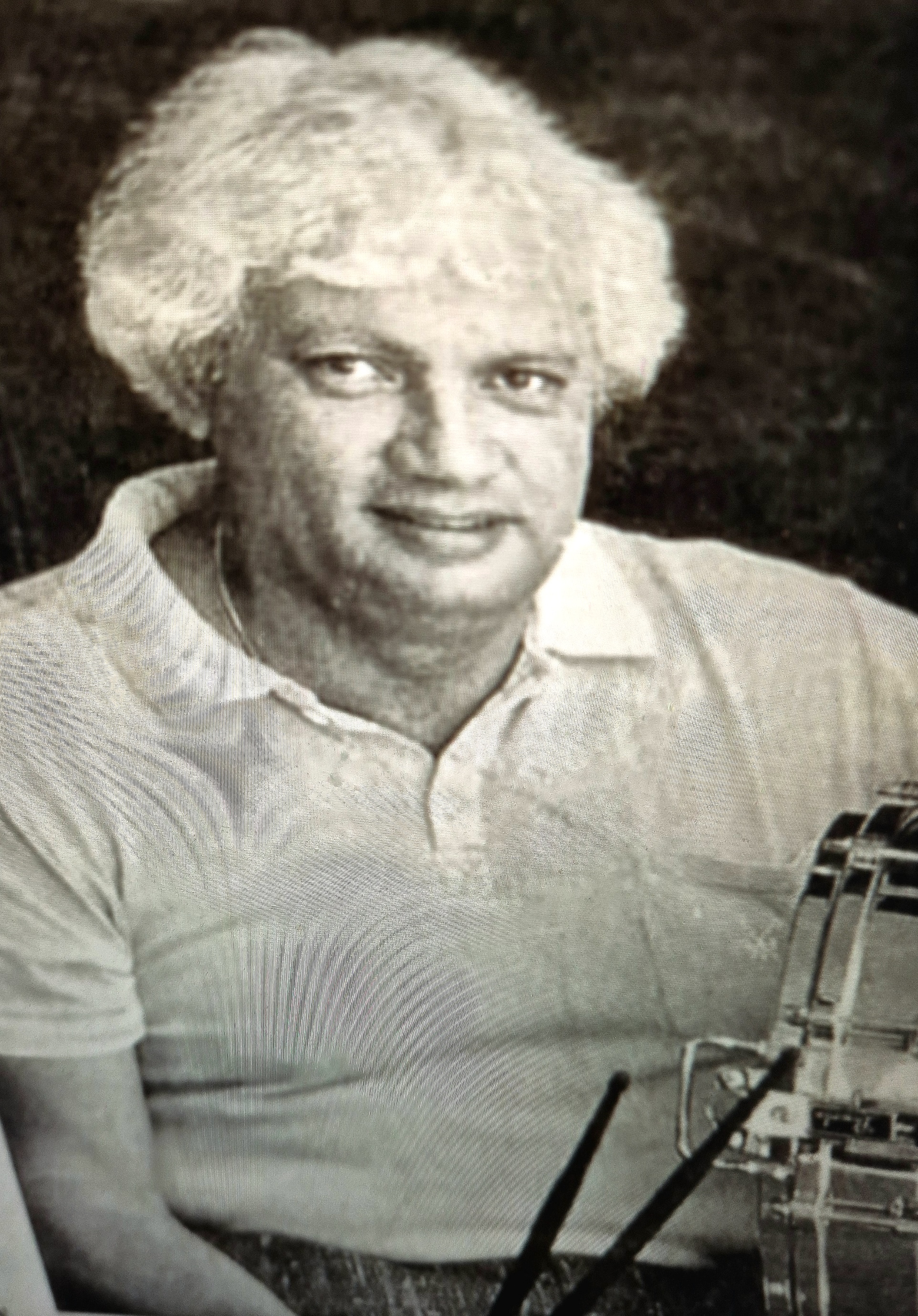
Monty Weber: strong views about the music he loved.
23 June 2026
Drummer Monty Weber was very capable of playing all styles of music – pop, funk, fusion, ghoema – but the one style he really wanted to do, all the time, was jazz, “pure jazz” in his words.
He was never backward in coming forward to tell anyone who cared to listen that he played all the other styles grudgingly because he had to make a living.
Monty died in 1999 at the age of 58 after being dogged by years of ill health. For many years he had been a formidable figure on the South African music scene. Yesterday, June 22, would have been his birthday and this blog wants to use the occasion to acknowledge a musician who contributed so much and had so much more to give by the time he died.
Monty Weber broke the mould of what role a drummer usually had in a group. They were there to keep time and let the performers in front grab most of the glory.
Not for Monty though. He added heft in whatever group he played in. He had the intellect to lead from behind the drums, particularly in the ’70s and ’80s when he played with much younger musicians. By then Monty already had more than 20 years’ under his belt and he had learnt at the feet of local jazz giants such as Chris McGregor, Dollar Brand, Kenny Jephthah.
Monty was just 16 in 1957, when he started satisfying his thirst for jazz by hanging out at Davey Saunders’ ballroom studio, Ambassadors, on the fringe of District 6 where all the big names in Cape Town jazz gathered to practise and play. Dollar used to rehearse there along with musicians like Johnny Gertze, Hugh Masekela when he was in town, Johnny Gertze, the Schilders and the Moses boys.
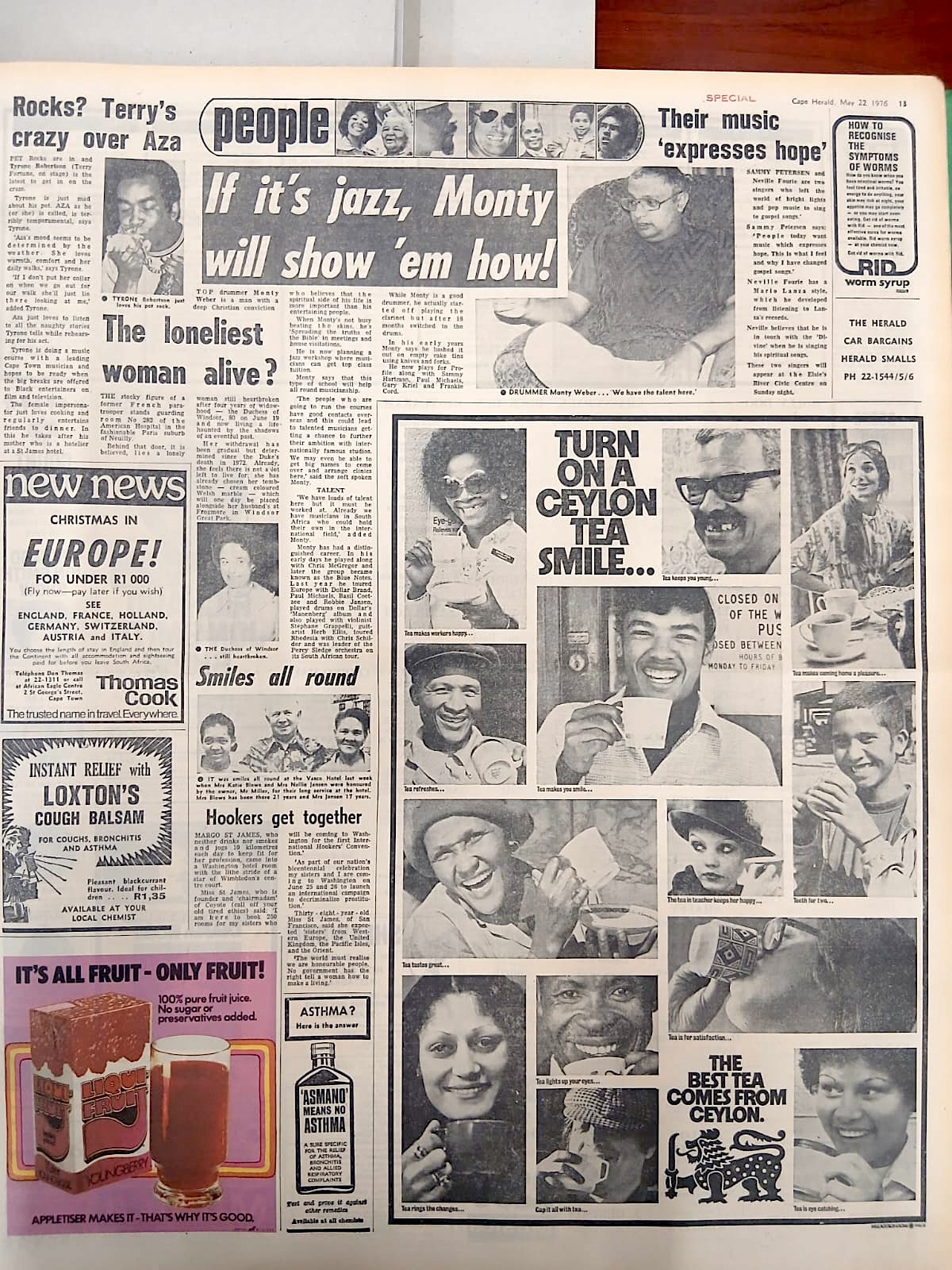 He was always going to be drummer. As he told a UCT history project a few years before he died, he was beating out a rhythm on the pots and pans as he washed the dishes in the Rondebosch home in which he was born in 1941.
“I used to arrange the dishes and then, half-past eleven at night, I am still washing up because of playing drums on pots and pans and glasses and things. That’s how it started,” he told the interviewer.
His introduction to jazz came when he wandered into a record bar in Claremont and heard an interesting song being played. “I asked the guy what was playing – and can I buy it please?”
The song was the [US band] Modern Jazz Quartet’s version of Softly As In The Morning Sunrise. Monty was hooked and bought himself a set of drums, “not good but the best I could afford at the time”.
He had previously acquired a clarinet because of a well-known clarinettist touring South Africa but that faded to nothing.
When he was old enough, he started playing with Richard Schilder and bassist Johnny Gertze and jammed with many of the local jazz musicians as a learning experience.
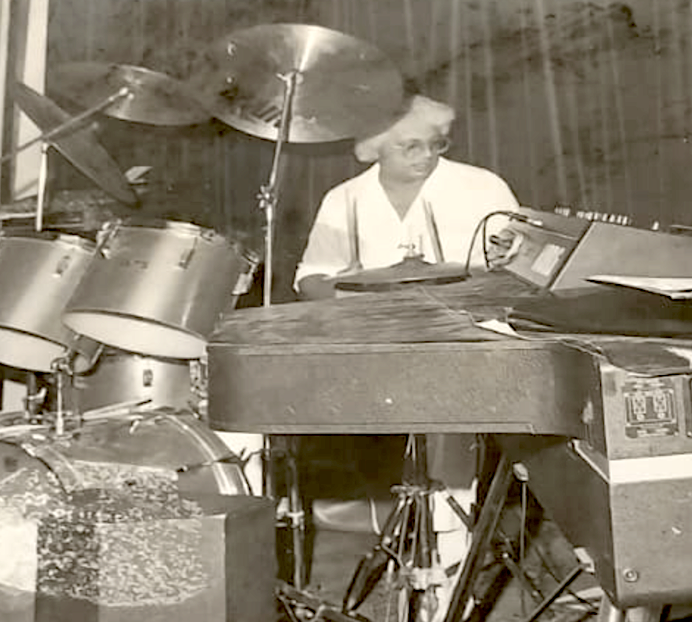 In the mid-Sixties, he ended up on tour with the Golden City Dixies travelling as far afield as Mozambique. That tour group included a young Sammy Hartman and Zane Adams.
Back in Cape Town Monty did what most other professional musicians did in the Sixties – they ended up playing mainly in white clubs where the pay was much better and, at certain venues, the music was a little closer to the jazz that he liked.
He told the UCT project that they played at dives like the Catacombs which catered mainly for sailors in port and the music was pop stuff to get the punters to dance. Kenny Jephthah, a top guitarist, was playing the Shadows music for the crowd.
“When we played at Maxine’s, the crowd was a bit more sophisticated,” Monty said. “We entertained them with bossa nova and Latin music and [jazz] standards.
Monty was working six nights a week with Kenny, pianist Henry February and bassist Paul Michaels. Although the pay was better than clubs on the Cape Flats, Monty still felt it wasn’t enough.
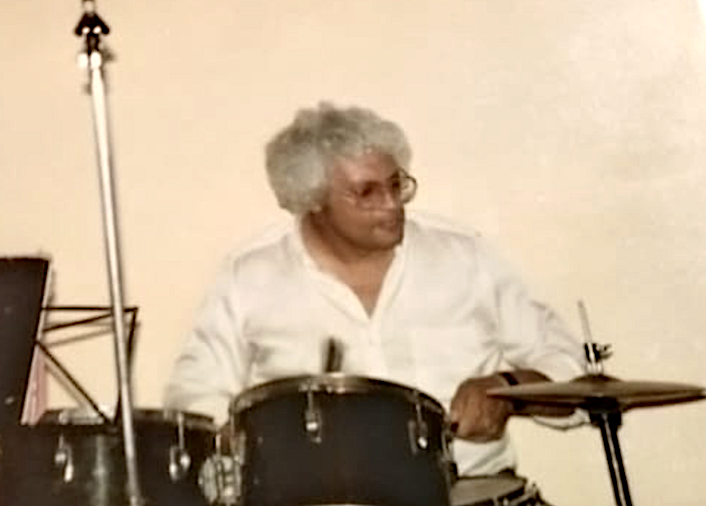 In the late ’60s after spending a year in London, he was roped into the big band that supported Percy Sledge on his hugely successful tour and he was a man much in demand. It came with some sacrifices though. He could not devote as much time on . . . pure jazz. The appreciation for it just wasn’t big enough to earn a living from.
One of the significant times in his long career was when Monty went into a Cape Town studio with bassist Paul Michaels, saxophonists Basil Coetzee, Robbie Jansen and Morris Goldberg and, of course pianist Abdullah Ibrahim to record Mannenberg Is Where It’s Happening. While it was a moment to be proud of being associated with such a monster hit, it never translated into any long-term financial reward. “We didn’t get much out of it. Dollar and Rashied Valli who financed it, they made plenty bucks.”
Monty had a pretty jaundiced view of the record industry even though at one time, he was working for a local record company as a producer. He even went into the studio himself with a group comprising himself, bassist Lionel Beukes, saxmen Basil Coetzee and Winston Mankunku, pianist Sammy Hartman and guitarist Errol Dyers. The group was called District 6.
Monty told the UCT project: “I don’t know what happened to it, it never sold and I don’t know why, maybe it was a bit before its time you know?”
One of Monty’s other bugbears was the emergence of “Cape jazz” as a genre. He told the project, “That’s just a phrase coined by somebody. Do you get Japanese Jazz? Do you get German Jazz? Do you get English Jazz? So, what’s so special about Cape Town that it should claim its own jazz. Jazz is jazz.”
The tune Mannenberg, he contended, was “not a jazz thing, it’s township music, you understand; although the jazz thing comes from the improvising”.
Monty’s widow, Jean, says if her late husband could have stayed just a pure jazz musician, he would have.
“We had to leave the country and play up in Mmbatho, Swaziland to earn a living. Things were bad those years as far as musicians getting paid. But they loved the music, it was the jazz, the attraction,” she said.
“He didn’t mind having to play the ghoema stuff. He didn’t have a choice. If you wanted to earn the bucks, you had to do it. He even became the musical director of D6 The Musical. At least there he received decent money. But otherwise, it was hard those days for musicians, especially the non-whites, to make a living.”
Things were going pretty well for Monty into the ’90s. He was much sought after; he had a radio program going and he was touring overseas. Things started going south when his health became worse. He had heart issues; he was arthritic and diabetic.
Jeans says that was probably the low point in his long career. “He came back from Sweden after playing with Jack Pohl and I had to rush him to hospital. Two toes were going bad, practically falling off.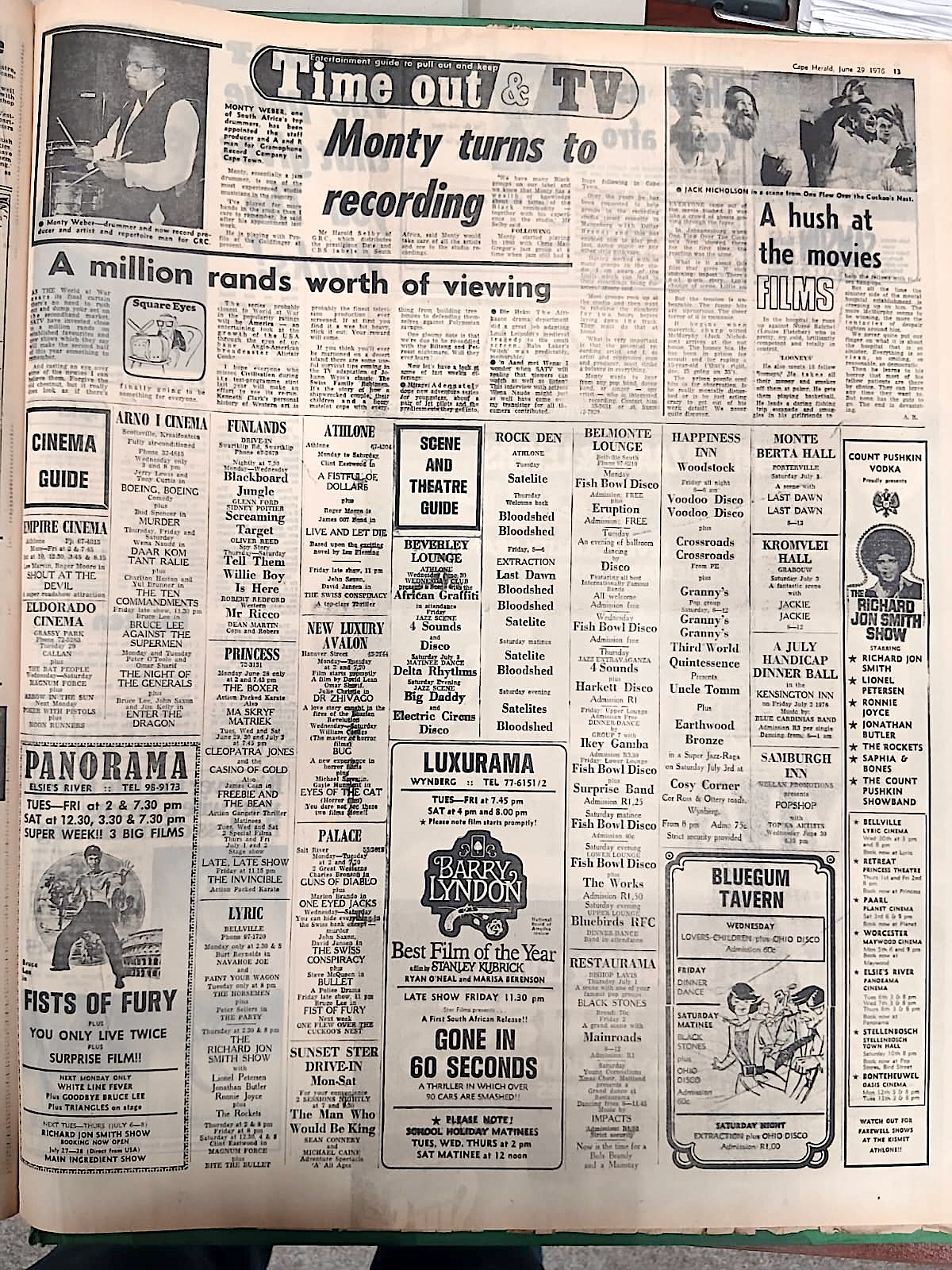
“The health issues affected him in some ways. Just before then, Monty became very spiritual. Like we say, he found the Lord. His whole life just turned around completely. That was his focus. His focus was on God. He was a great believer. He was very sincere about it.
“In the end, he just took his health issues as one of those things. He was very pleasant even after that. When he lost part of the one leg, he knew it was over. Diabetes is a terrible disease. He wasn’t bitter. He just accepted that what happened to him was just one of those things. You know life goes on
In an interview in 1995, Monty said he felt positive about moving away from playing clubs which he called “a musicians graveyard” and switched to gospel. “I spent 30 years making music for the devil, now I’m making music for God,” he was quoted as saying.
He became musical director of Ottery’s Good Hope Christian Centre. He wanted to inject a more South African flavour in the worshippers’ essentially American style of evangelism to get it to an international level of excellence.

