Author: Warren Ludski

Farewell Rudolph Paulse, the quiet legend

rud paul low res 4

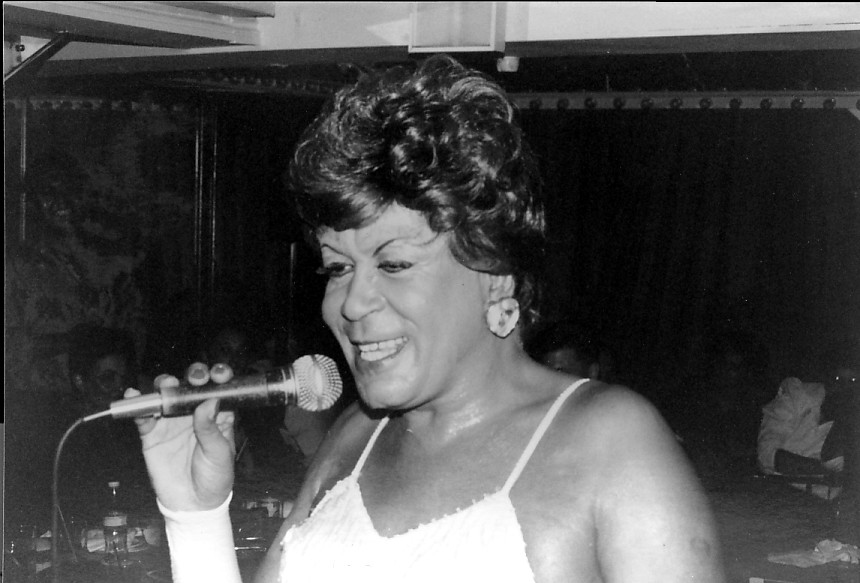
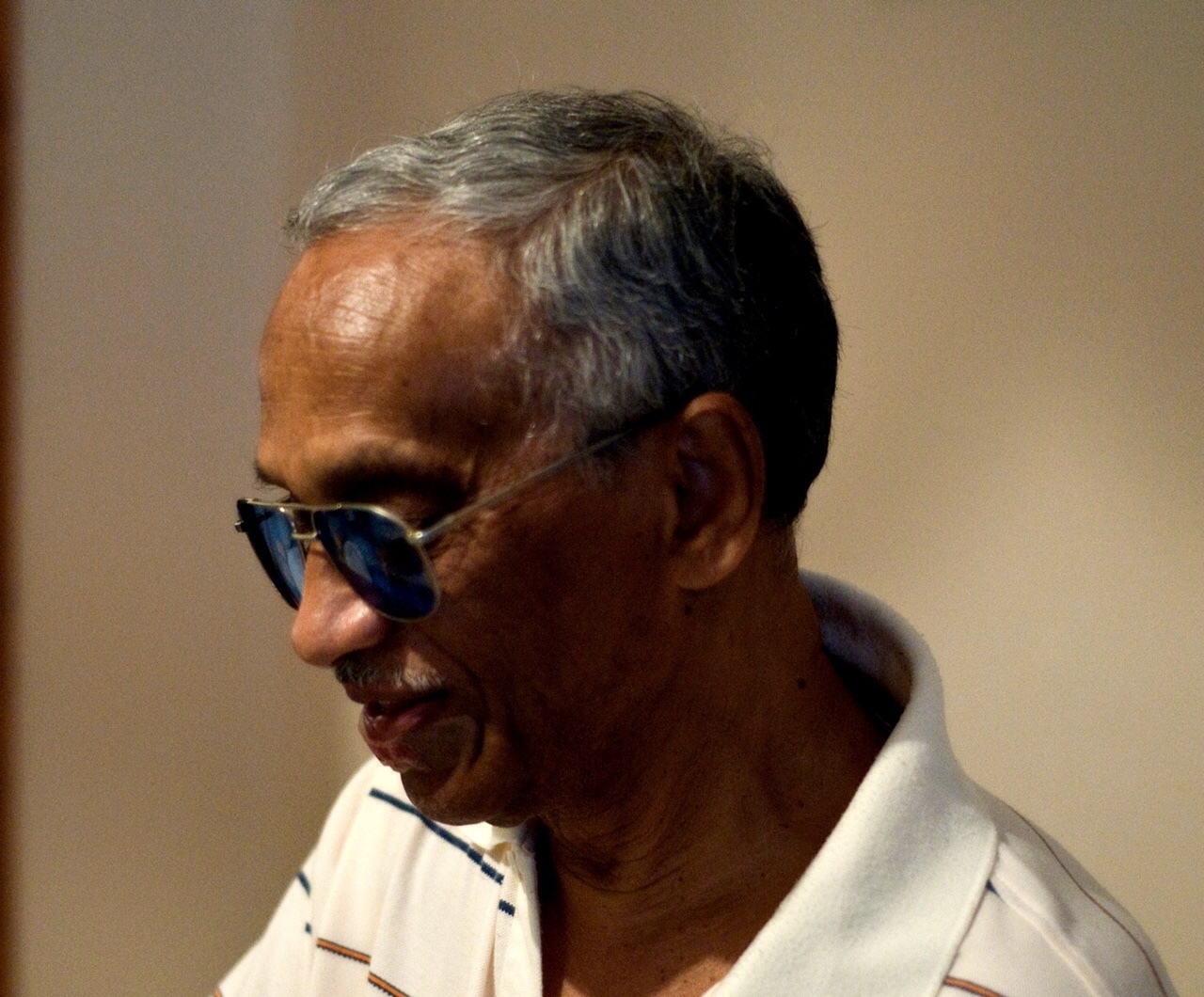
Entertainer Rudolph Paulse . . . the “quiet legend”.

18 May 2016

Veteran Cape Town entertainer Rudolph Paulse died last week. In the idiom of the theatre, he has left the stage, “exit left” . . . largely unannounced save for a few postings on Facebook.

Rudolph was more than that, much more. He deserves to be acknowledged for all the years he put in entertaining people as a singer, and helping other entertainers with gigs when he was managing some of the top clubs in the Cape.

Strangely though, having known Rudolph since our first meeting back in 1967, I don’t think he would be bothered were there no trumpets and alarum accompanying his passing.

In that soft-spoken, self-effacing way, he would probably simply have shrugged his shoulders and said, “aah, it’s alright”.

That’s typical of the man. It’s almost as if he didn’t really want anyone to make a fuss of him, which is almost a contradiction in terms. Most entertainers thrive on that adulation.

Those who have been around a long time, however, are well aware of his stature and his contribution to local entertainment.

One such person is Dave Bestman who was already a seasoned performer when Rudolph first made his stage debut in 1965.

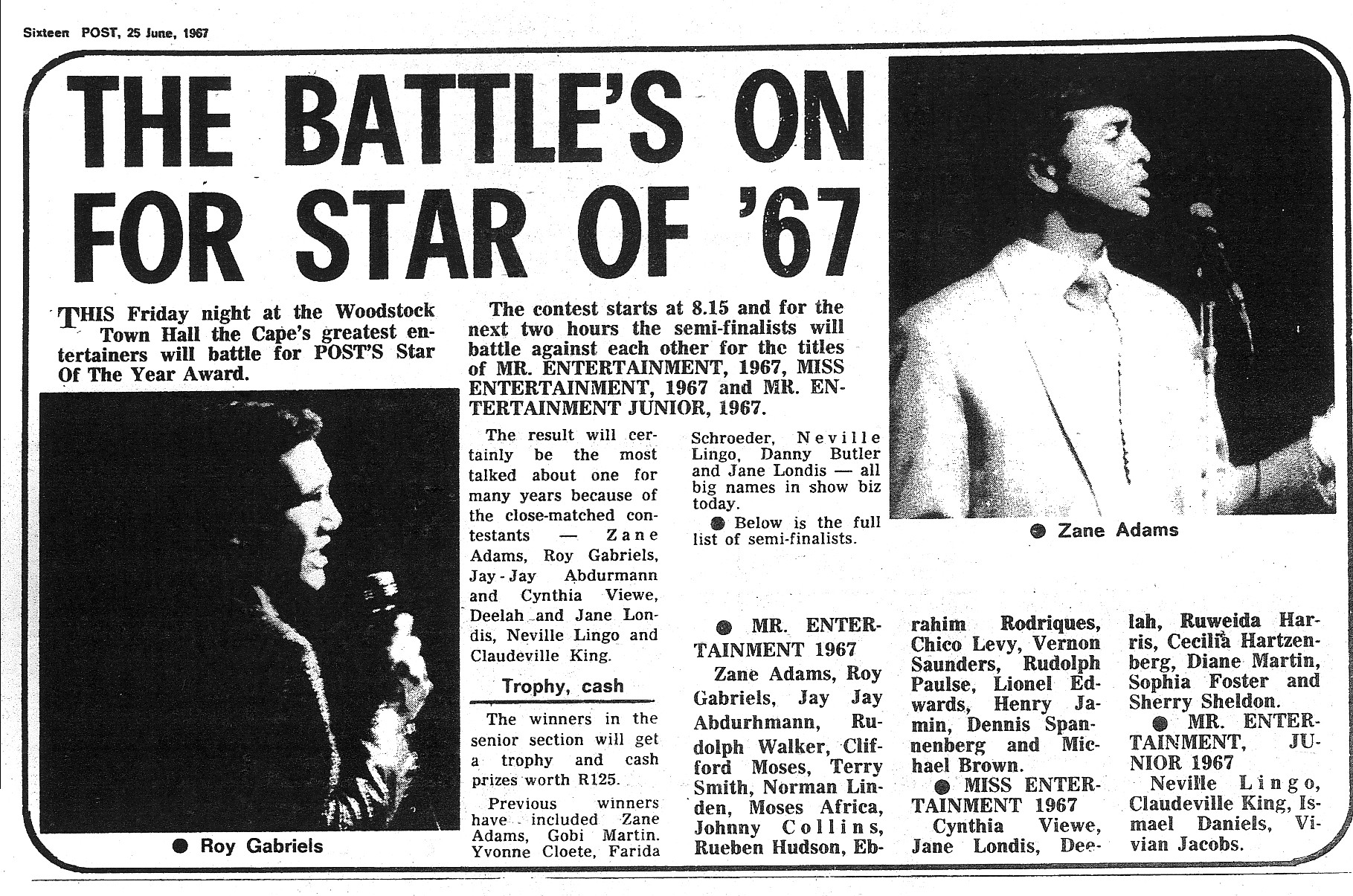
Rudolph Paulse Post 1

Rudolph Paulse first came to prominence  in Post’s Mr Entertainment contest in 1967. [Click on image to read]

“I was with the Dixies at the time when Rudolph had a stint with us in the late Sixties,” Dave recalled this week. “He was quite an accomplished singer performing the popular ballads of the day.

“The thing I remember most about him, though, was his reserved demeanour. He was just so quiet. He hardly spoke. And he stayed like that throughout his career.

“I called him the ‘quiet legend’, he delivered in so many ways but you would hardly notice.

“He hardly ever made a fuss, unlike some of those other prima donnas we had to put up with.”

Here’s a fer’instance of Rudolph not putting up a fuss: when he started out as a singer, he was Rudolph Porthen, his real name.

In a publication called Mitchell’s Plain: A Place In The Sun, published a few years ago, it featured a profile on Rudolph. In it he said: “My surname is not Paulse, it’s actually Porthen. People constantly mispronounced my name, so Rudolph Paulse became my stage name.”

No fuss, no bother.

Rudolph was born in District 6, and as the profile says, his life was defined by music.

I first came across the name Rudolph Paulse when I started out as a journalist with the Cape Post and covered the entertainment beat. The newspaper ran one of its popular Mr Entertainment contests and Rudolph was a finalist along with Zane Adams, Cliffie Moses, Roy Gabriels, Terry Smith, Jay Jay, Chico Levy and Vernon Saunders.

For the next 20 years or so, I had regular contact with him be it at a stage show or, in the latter years, when he managed top nightclubs like The Goldfinger, The Galaxy or Club Fantasy in Mitchells Plain. He was always the same . . . affable, approachable and urbane.

In his time he worked with the likes of Dollar Brand, Jonathan Butler, Sammy Hartman, Sophia Foster, Taliep Petersen. His star may not have burnt as brightly as theirs but he earned their respect with his professionalism.

As club manager, he provided work for top groups like Sakhile and Bloodshed and jazz gigs for the Leslie Kleinsmiths and Robbie Jansens of this world.

One particular highlight was being MC for the popular Manhattans group when they played Cape Town.

Leslie Kleinsmith, now living in France, has fond memories of Rudolph.

“He sure was a quiet, kind of a gentle giant with a big heart. He was very good at bringing and putting people together for various variety shows,” Leslie said.

“He managed The Goldfinger for a number of years. Most of the work I did there was through him. If I told him, I was already working at two places on that night, he would increase the money and rearrange the program. Then, I would find myself working at three places on that particular night.

“In his quiet way, he would make things happen.

“He also founded the vocal group, Afro Express, with himself as the baritone but always featuring others in the lead roles, like Sandra Butler and a few others whose names fail me now. Rudolph was also very adept in the role of an MC and compere.

rudol Paulse Af Ex Hi res 2

Rudolph Paulse struts his stuff with Afro Express at the Goldfinger nightclub in Athlone in the mid-Seventies. That’s him on the right.

“In the last few years, he spent about six or seven years in a show or various retro shows in Spain as or in the role of Barry White style singer.

“It was during that time that his health took a bad turn. He came back to Cape Town, we did a benefit show for him at Club West End and that was the last time I saw him.”

As the stage work dried up in the Seventies, Rudolph turned his hand to managing clubs. He organised dances, fashion shows and talent contests. He realised that if he wanted to be a competent manager, he needed better skills.

He undertook a management course and soon after opened his own business in the Mitchell’s Plain Town Centre.

His life had its up ands down. His business venture was one of the downs. His presence at the clubs was one of the ups. Wherever he went, the clubs drew a crowd.

His later years saw regular trips to Spain to perform, but his health started failing.

His wife Geraldine said in recent years Rudolph was diabetic, suffered with gout, had high cholesterol and a heart condition.

I saw Rudolph two years ago at Kader Khan’s memorial service. We hadn’t seen each other for more than 20 years. He didn’t look well. It’s not a memory of him I’d like to keep.

Rather, I want to remember that smooth voice easing through My Way or any one of the numbers of ballads he crooned so effortlessly. I want to remember that whispered aside when I walked into the Galaxy those many years ago: “I’ll have a whiskey on the table in a minute”, he would say.

He didn’t disappoint. I’ll drink another whiskey in his name tonight.

[Click on the images below to read the articles]

rudolpf Af Ex low res 2

Rudolph Paulse, on left, with Afro Express at the Goldfinger night in Athlone.

This material is copyrighted. Seek permission before re-publishing.

Lionel Beukes . . . is he here? Or is he Out of Town?

Lionel Beukes

Bassist Lionel Beukes . . . back in Cape Town after playing for the past 10 years in China. With Camillo Lombard, Tich Jean Pierre and Denver Furness, he has reformed the 1992 group Out Of Town. Photo courtesy:

Veteran bassist Lionel Beukes is back in town after 10 years of playing top venues in China. Yep, happily back home. But ask him what he is up to and his first response is — out of town.

So what is it to be: back in town or out of town. Well, both.

He is back in Cape Town and he is back with the band he was playing with back in 1992. That band was called Out of Town.

“It was a nice, tight little group with Camillo Lombard on keyboards, Denver Furness on drums, Tich Jean Pierre on guitar and myself on bass,” Lionel said this week.

“We were around for a couple of years and then we went our separate ways.”

“I ended up playing overseas for 15 years, mainly in China for the past 10 years. But I’m home now and looking to catch up with some of the guys I played with long ago and follow through on a few projects I have been kicking over in my head while I was in China.”

Lionel is 65 years old now and, having started back in the mid-Sixties, he would have played with a few of the leading lights.

He began playing with the Missiles in Athlone with musicians like Charlie Anyster and Llewellyn Roman and they were quite popular. As was with the case with most of the musicians in those days, Lionel had gigs with quite a few groups most notably with the Cape Flats cult band, Oswietie.

“It was all too brief but what a band,” he recalled. “We had class in that group . . . Russell Herman, Mervyn Africa, Robbie Jansen, Kader Khan, Nazir Kapdi . . . all of them were outstanding talents on their instruments.

“And that name. People kept asking us what the name of the group was and we didn’t have one. All we could say was ‘ons wietie’. That became Oswietie, and it stuck.”

Lionel and Out of Town has been featuring at the Lansdowne Club, Swingers, on Sunday nights for the past few weeks and it looks like it will become a permanent gig.

Will he stay in Cape Town?

“It depends. I’m hoping to get stuck into the projects that I have in mind. One of them is teeing up with Ebrahim Khalil Shihab (Chris Schilder) to do a concert of his original stuff and I’d like to do a recording of my own compositions which I penned while I was in China.”

Out of Town has taken advantage of the end of the run of the show Remembering the Lux to get singer Leslie Kleinsmith to front the group on Sunday, January 24.

It might well lead to more gigs for Leslie before he leaves for his new home in France at the end of March. After the Lux show run at The Baxter, Leslie has already scored a gig on the jazz boat cruise up the West Coast and the Tietiesbaai jazz gig. He also has Sunday brunch gigs at The Winchester in Sea Point.

Back in the day . . . Lionel Beukes, left, with Nazir Kapdi on drums, Robbie Jansen on flute and Mervyn Africa on keyboards, playing for Oswietie.

Zelda Benjamin, the unlikely jazz legend

uhren4Here’s a quick quiz question: which female jazz singer has thrilled Cape Town audiences continuously and consistently since the early ’60s.

There are not too many names that fit that bill but if you said Zelda Benjamin, give yourself a hand and collect your prize at the door.

Yep, Zelda has been plying her trade as a jazz singer since way back when – a touch over 60 years. Strangely enough, jazz singing isn’t really her “trade”.

In fact, Zelda has never been a “professional” jazz singer. She is quite emphatic about that. She’s been a nurse for a short while, a chemical analyst of sorts at a cleaning place, a Cape Town City Council housing branch employee, and a health worker dispensing contraceptive pills to young women.

For her, jazz singing has been a secondary thing. The day job, raising two children and running the house came first.

There are a few other interesting things about Cape Town’s “first lady jazz”.

She’s never recorded a song for commercial release.

She has never had any formal training as a singer.

She has never sung further away from home than Plettenberg Bay – and that was just a weekend gig.

She was born Zelda Uhren 80 years ago in District 6, with a father of Dutch Jewish origin.

And no, she’s not related to Bea Benjamin.  And don’t ask her why her Facebook name is ZEDLA Benjamin!!!

Read more about Zelda’s stellar career as a “part-time” jazz diva here.

Alistair Izobell, Mr Versatile

Alistair Izobell . . . he is four-foot nothing but he stands tall on the entertainment scene. This week is a big week in his 30-year career as an entertainer. His latest effort, Remembering The Lux, featuring the likes of Terry Fortune, Leslie Kleinsmith, Loukmaan Adams, Nesha Abrahams, Terry Smith, opens at The Baxter.

It is essentially a walk down memory lane and Alistair’s way of documenting the past.

In an open and frank interview, Alistair talks about faith, family, and his take on his work in the entertainment industry spanning 30 years.

Click here to read the full interview.

There are also interviews with other  Music Legends of Cape Town. Feel free to leave a comment.

Alistair and Loukmaan and ghoema in Sydney. What’s next?


This slideshow requires JavaScript.

Sydney rocked to ghoema music as Alistair Izobell and Loukmaan Adams – ably assisted by their musical director, pianist Trevino Isaacs – brought a touch of the Cape Flats to the Harbour City last Saturday night.

Performing at the Hurlstone Park Club, filled practically wall-to-wall with expat Capetonians, the two singers thrilled the more than 350 people with a set that went from funk and blues to “opskud” and ghoema.

They belted out perennial Cape Town dance floor hits like All Night Long, Shining Star, Give Me Hope Johanna, Hot Hot Hot, toned it down with a Malay Choir Song and a moody Misty, before cranking it up with the “traditional” stuff – Daa’ Kom Die Alabama, Januarie Februarie, and Dina Na Kannakia.

It was all hi-energy, dynamic and vibrant. One wouldn’t have expected anything less from these two seasoned performers. As they are wont to say on the Cape Flats: Die jol ruk!!

The occasion, a swish Black & White Ball, was a “fly-in-fly-out” one-off gig put on by Beryl Crosher-Segers as part of her project to raise funds for scholarships for needy pupils in Cape Town. It was sold out months before the event.

Beryl Crosher-Segers . . . bringing a bit of "local is lekker" for expats in Australia.

Beryl Crosher-Segers . . . bringing a bit of “local is lekker” for expats in Australia.

Beryl, who lives in Sydney, has had much success over the years with this type of show. She’s brought over Leslie Kleinsmith, Terry Fortune, The Rockets, Alistair, and the late Tony Schilder and Zane Adams. The Jonathan Butler show was the only concert-type performance she arranged.

Her dinner-dance shows certainly strike a chord in the South African ex-pat community in Sydney (with its distinctly Cape Flats flavour mind you) and one is left in no doubt that at midnight they’ve had a great time. The dance floor was always full.

As nice as it is though, it serves only to satisfy a particular need, and that is to provide the crowd with that nostalgia fix, a catch-up with old friends, and that warm inner glow of their times at, say, The Galaxy.

But isn’t there more to what our performers have to offer? Wouldn’t it be great if we had a bit of change of speed . . . like maybe a concert that displays the full range of skills? Local is lekker . . . but shouldn’t we be wanting more of them?

And does the ex-pat community have to restrict itself to just music performances? Is there scope for theatre?

What if someone kicked along the idea of bringing My Word! Redesigning Buckingham Palace, the late Richard Rive play about District 6? Or A Class of One: Cold Case – Revisiting Dulcie September, a play about the late Athlone ANC activist assassinated in Paris in 1988. The first stars actor/director Basil Appollis, the later acclaimed actor Denise Newman.

Both theatrical works are part of the political narrative integral to the community’s history. It is part of the nascent process of documenting the stories before they become folklore.

I’m no expert in the costings involved (I have not seen either show) but . . .

One option that could be looked at is crowd funding. In fact, the Dulcie September production was put on the boards earlier this year in Cape Town via crowd funding over the Internet.

These observations aren’t directed at or intended to put pressure on Beryl. She has done her fair share. They are, I hope, the start of an on-going discussion to kick this idea along.

Discuss away. All comments welcome. There is a box for a comment/reply below. Please use it.

Trevino Isaacs, one of the new breed of Cape Town musicians who give hope for growth in musical development on the local scene.

Trevino Isaacs, one of the new breed of Cape Town musicians who give hope for growth in musical development on the local scene.

This material is copyrighted. Prior approval has to be obtained before any reproduction.


What is it Terry Fortune wants to change?

Terry Fortune’s chronicles of his life are slowly being laid bare on his Facebook page. It is candid in places, shocking at times, disjointed in the manner of a person who has so much to tell but can’t get it out fast enough.

But never boring. He has obviously led a colourful life in the almost 50 years he has been on stage in South Africa and overseas. Most times people who have enjoyed these lived experiences tend to say they wouldn’t change a thing if they were to live their lives over again.

No not Terry, no. He would change something, not a lot. In fact, just ONE thing.

What is it that Terry would like to change? Click here to find out.


Robert Davids . . . a life unfulfilled

Robert Davids . . . playwright, musician, composer.

26 August 2015

Robert Davids, Cape Town musician and  playwright, died  last week, aged 79.

In the early days of my journalistic career, back in the late Sixties, when I plied my trade as an entertainment reporter at that august yet sensationalist tabloid, The Cape Post, I must have dealt with hundreds of musicians.

The majority have faded in the mists of time, in part due to the fact I have been out of the country for 30 years.

But Robert Davids I do remember. Quite distinctly. Quite emphatically.

He stands out in the memory because he was . . . different. Not peculiarly different. Not funny different. No, different as in a class above most of the others.

I may not be able to detail the minutiae of all of our interactions but the gist of it was he was always looking for a write-up on some project or other.

I do remember his music play, Goodbye District 6, and his passionate belief in it. Unfortunately, that passion was not shared by as many people as he would have liked. More’s the pity.
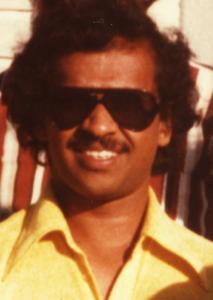
robert in young days

A young Robert Davids

Almost 20 years later, another local work, District 6 The Musical, was a resounding success. Was it that Robert was too far ahead of his time? Too prescient?

In all he wrote five plays: Goodbye District 6, Friday Friday, Sound You Fool, a one-man satire Sugar Coated Pill, and a children’s space fantasy, Monsters. He also penned numerous musical compositions.

I remember him wandering into our newspaper offices on a few occasions to update me on his latest project/venture or band he was with. On a number of occasions I saw him playing with various groups around the traps. Not contorting himself in a vocal frenzy, not laying down some heavy licks on the guitar. No, just quietly pounding out an enchanting rhythm on the congas. Congas? Yeah, that’s what Robert brought to the table. Something different, something to bend the dominant paradigm.

Unfortunately, newspapers of the Sixties and Seventies servicing the black communities did not lend themselves to in-depth interviews in the entertainment space.

It would have been something special getting into his head and having a deep and meaningful with Robert. He had the intellectual rigour that could have produced something eminently readable – and given us an insight into his musical thought processes. He would have been a marvellous subject for an interview on this blog.

Now we are left to ponder on what might have been. More’s the pity again. He will be, he should be remembered.


Terry Fortune’s Tribute
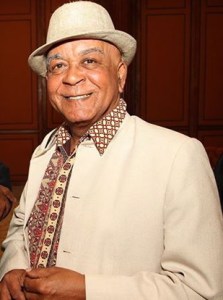
Terry fortune

Terry Fortune . . . Robert wrote a song for him in the musical.

It was early 1969, I had just turned 20 and was still living with my parents in Allenby Drive ,Retreat. One day I got a call: “Hi, it’s Robbie.”

“Who?” I asked, puzzled.

“Robbie Davids . . .”

“Oh hi,” I answered. After the normal pleasantries he said: “I’ve written a musical theatre piece about District 6 called Goodbye District 6′. It contains vocal songs and instrumental pieces . . . all original.”

“Ok, come around”, I said. He did, early the next morning in his 1966 Volkswagen fastback. I listened to the music and loved it. He had written a song for me to sing called Mr Hammer Man, a protest song pleading with the bulldozers to stop the destruction.

Goodbye District 6 was written nearly 20 years before the famous musical by Taliep Petersen and David Kramer’s District 6 The Musical’.

We rehearsed for months and eventually staged it at the Space Theatre in Long Street, and then a jazz venue in Green Point run by Merton Barrow. We also performed it at the Lansdowne Civic Centre and various other community halls.

On keyboards was Aubrey Kinnes and Robbie played vibraphone. I also remember he had his two brothers, Cyril and Stan, helping with the technical stuff.

Goodbye District 6 received rave reviews in the local newspapers but it finally ran aground when we did the Wynberg Town Hall and the impresario ran away with the money – the story of our lives.

Robbie was eager and hungry for success. But by the ’70s apartheid bit savagely. There was no room for artists to be creative, let alone for protest music or theatre in an apartheid South Africa. Due to this and other factors, many of my peers in the music industry regrettably never achieved their dreams but they did sow the seeds that that’s artists should nurture and use to develop.

During the ’70s I saw Robbie lugging his vibraphone and congas to the Sherwood, the Goldfinger, the Beverley in Athlone, and the Jolly Carp, jamming with the guys. He loved being part of the industry and playing music.

Then he disappeared off the scene and I didn’t see him for years until fairly recently. It was Greg and Fiona’s renewal of their wedding vows and Robbie was there. He said to me: “I’ve rewritten Goodbye District 6, added new songs and want to do it as an opera.”

He was as eager and enthusiastic as ever. Next year it will be 50 years since District 6 was proclaimed an area set aside for white occupation . . .

So . . . Robbie my bro’ . . . you will probably knock into Zane, Taliep, Monty Weber and the other main “manne”. Give them our love . . . and if you guys decide to put on something – and you are looking for a singer – don’t look my way! I’m staying right here . . . I’m not going anywhere soon.


Greg Davids – a son remembers

Our Dad did not hold down a 9-5 job. He did not leave at the crack of dawn or return before sunset exhausted from a day of unappreciated toil in the service of another’s dream. Nor did he conform to the expectations for a black man in the ’50s, ’60s and ’70s’ worth to be defined by the daily sweat on his brow or the callous-formed hands of one who was used to hard labour.

Instead, he dared to dream about how greatness could exist from within. He considered creative expression as a nobler alternative and reasoned that when sculpted as a platform for social commentary, the arts would eloquently give voice.

Robert Herman Alexander Davids, with the burden of a long name and a difficult childhood – the effects of which would often weigh heavily on his relationships with others – chose his innate creativity to make his mark.

To achieve this, he defied the convention of the time, the staid societal norms and the constraints of an unjust political system. Without reference and the support of but a few, he redefined the stereotypical image of the musician of the day – he did not drink or smoke, he worked hard and he went straight home most nights.

With self-actualisation as his strongest attribute and steely self-imposed discipline, he helped re-invent the role of the musician in South African society. He became a househusband, one of the first local musicians to trade a steady day job in order to commit time to developing his craft. His dream was to become an accomplished music composer and arranger.

Our father diligently spent each day carrying out first the duties of tending the children and the home and then with discipline and focused intent, honed his ability to read, write and arrange music.

He also created several clever inventions that saw him face-to-face with a business world for which he was no match. A big part of his routine was practising his instruments: drums, congas, vibraphone, piano and voice. This daily practice regime exposed us to culture – the arts, music, and an appreciation for theatre.

We grew up singing our Dad’s catchy songs, recorded and performed by great local artists, played back live, on the reel-to-reel, long player and eventually the wireless: Hammer Man, Friday Friday, We Live In A Double Bed, Fight For True Love, and Hello Ms Phone – how cool was that!

He was a lifetime SAMRO member. At night, after he helped with supper, often cooking the family meals, he would slip onto the music club scene and became the alter ego of his daily self, the Hip Cat, the Conga Man. With his psychedelic painted congas, bongos and timbales he created a role for Latin percussion on the SA jazz scene.

Appearances with the bands of the day, The Four Sounds, Henry February Band, Sabenza, Pacific Express, pre-Tananas Steve Newman, and many others, his playing added new colour to their music and helped build a solid swing groove which became his signature sound.

His spirited performances and soaring percussion solos informed generations of music lovers. These nightly gigs sadly never realised the intended income for our Dad or most of his generation of musicians.

Much of the money remained in the hands of exploitative club owners, promoters and bandleaders. Robbie Davids served music first, and with little pressure to financially support his family, seldom insisted on payment. Our Mom, Marj, the main family breadwinner, unrelentingly supported our Dad with his art in spite of the personal price she continued to pay throughout their 52 years together as the wife of a struggling musician.

His numerous creative endeavours did not live up to the commercial success that he promised it would. It did however “set him apart” as an innovator and as a musician who, if the support were different and the creative economy better acknowledged, he might have gone on to enjoy the success his talent deserved.

Robert Davids, through his projects, helped influence the careers of Zelda Benjamin, Terry Fortune, Darryl Andrews, Danny Butler, Vernon Castle, Leslie Kleinsmith, Vinette (7de Laan) & Vincent (The Kumars) Ebrahim and many others. He wrote five locally acclaimed musicals, most notably Goodbye District 6 that preceded the famous musical by a number of years.

He composed, arranged and produced several tunes and recording sessions. He studied part-time music courses at Stellenbosch University, UWC and UCT Music School and continued to study and write music right up until his death.

His last major work was to compose a full suite of tunes for jazz orchestra. His practice and composing regime never slowed. Our Dad was an inventor and an artist, a gentleman and a life long musical scholar.

His earlier works were never without political perspective and he used his creative talent to address inequalities foisted upon the South African people. His music and theatre contributions often were expressions of freedom. To many of his peers he was loved and respected, especially because of his well-mannered demeanour.

His legacy is most evident in his children and grand children. He infused us with passion, creative intellect, critical thinking ability, the gift of time and most importantly, integrity.

As his eldest, the very essence of my joy – music, a lifetime of musical associations and deep friendships – are thanks to my Dad. It is an ever-continuing gift that champions many of my happiest moments.


A daughter’s insight: Janine remembers

My father, Robert, or Papa as he was known to his grandchildren, was a complex man, a man who did not conform to any stereotypical image of a person of his generation.

He was a highly creative individual with a strong moral code.

He was a musician, playwright and inventor who followed values of his choosing and did not drink alcohol, smoke or eat meat. He was a highly private person who shunned large social gatherings and parties.

If he had been born into a privileged family he would have been eccentric. As it was, he merely marched to the beat of his own drum . . .

We’ll remember him for his strong work ethic and discipline and how he was always pursuing some or other project – unfortunately, none was ever commercially successful.

We will also remember his unfailing punctuality – he always arrived early for an appointment or pick up. He was our informal safety officer at home, driving us crazy with his constant reminding to lock doors, pull out plugs and switch off appliances. We often joked about him having OCD and being paranoid, but the firm boundaries that he constructed for himself and those around him provided a home environment that felt safe and secure.

We grew up in a house where music was always played. Papa was always singing and drumming his fingers on tables and work countertops when not listening to albums of classical music. He may have been a jazz musician but he was not a music snob and kept abreast of what was happening on the pop scene by listening to pop music programmes on TV, often with the volume turned up very loudly.

Perhaps because our relationship was often complicated, I don’t think I appreciated, as a teenager, just how cool a dad he was! I am pleased that my children grew up around him. They appreciated him with all his quirks and idiosyncrasies and had a better relationship with him than I ever had.

He often looked after them when we went out because we knew that we could trust him to take care of them. For a long time they considered him their go-to-person for toasted cheese sandwiches and there were days when he spent a good afternoon, and a loaf or two, making their favourite snacks for them. It is a memory that will stay with them forever.

Papa became a vegetarian in the early ’80s and never wavered from the choice he made. In terms of food though, his one absolute weakness was sugar. He loved cakes, ice-cream and chocolate in any form. Family dinners were always very funny because we always tried to get him to wait for all of us to be seated before he started eating and my mother always tried to limit his consumption of desert, to no avail.

As an adult I realised that he had a stronger influence on all of us than what we were ever willing to recognise. He helped shape who and what we’ve become today and I know that we’ve acquired many more positive qualities and characteristics from him than negative ones. Papa, we will miss you, your laughter and tears and your particular brand of madness. Family dinners will not be the same without you but we will always have a bite of something sweet in your memory.

This material is copyrighted. Prior approval has to be obtained before any reproduction.Robert Davids with some of the cast of Friday Friday,
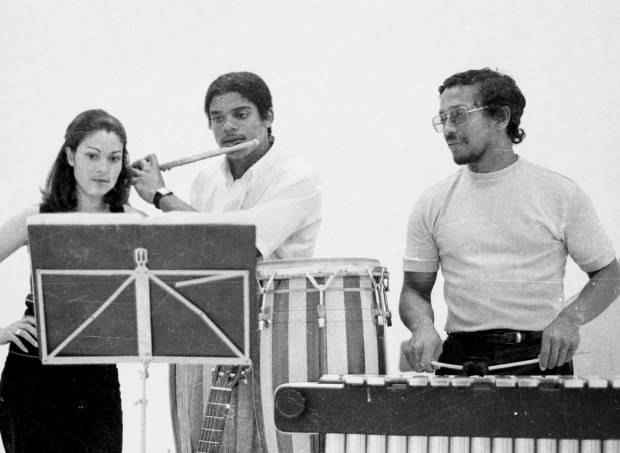
Robert Davids with some of the cast of Sound You Fool, singer/actor Connie Beukes and flautist Calvin Humbles.

Stephen Erasmus’s trials and triumphs

Stephen Erasmus . . .

Stephen Erasmus . . .

There’s hardly been a band that veteran bassist Stephen Erasmus hasn’t played with in his almost 50 years of plying his trade. He has seen it all, played it all  and done it all. He’s played the length and breadth of Southern Africa, played  Malaysia, played the Continent.

Yet, at 62, he doesn’t have much to show for it.

He is on a pension of R1000, he has long-term health issues which requires medication that costs R1200 a month.

But he isn’t all that fazed. He says if nothing else, he leaves a musical legacy — helping to define the sound that was known as goema and  is  now Cape  jazz — that is the staple diet of serious music lovers in Cape Town.

He composes a bit and plays the occasional gig, but it is a far cry from those heady days of the Seventies and Eighties when his home at 27 Church Street in Athlone was the centre of the universe for local musicians and hosted the likes of Winston Mankuku, Robbie Jansen, the Dyers brothers, Tony Cedras, Bheki Mseleku, Russell Herman, Mervyn Africa.

It is a familiar story with too many of our musicians. The rewards for providing so much pleasure for so many over the years is abysmal. It is an issue that needs to be addressed.

Read The Trials of Triumphs  of Stephen Erasmus at Music Legends of Cape Town and click on the Interviews with Artists tab. Feel free to leave a comment at end of the interview, particularly if you can help to add value to the debate regarding the fortunes of our best known musicians in their declining years.

Regards

Warren Ludski


Leslie, hier’s jou nanas, djy’s nie history nie, jou . . .

There’s that old saying that goes “out of sight, out of mind”.

So, given that Leslie Kleinsmith now finds himself living the quiet life in a little village in the south of France for the last few years, is he “out of mind” with his  thousands of fans back in his hometown?

LesKlein1

Leslie Kleinsmith . . . a man for all reasons.

Far from it! The veteran singer with the silky voice still has a presence back home if one uses social media as a guide.  Check out  his Facebook page. He only has to update his Status with a sneeze — and all his ”friends” will chip in with a “bless you!”

Leslie is a legend in Cape Town. He has earned that honour.  In a lengthy interview for this blog he opens up about his early life, his influences, the things which piss him off, his emotional first meeting with his son after 36 years, and reflections on three of his now departed contemporaries — Zane, Taliep and Tony Schilder — who meant so much to him. Read it here or click on the Interview with Artists on the menu bar. Also read how he got into District 6 The Musical at the end of the interview. And don’t be afraid to leave a comment at end and to maybe also follow this blog.

Respect goes a long way — back

respect1

Respect, one of Cape Town’s top groups of the late Sixties and a trendsetter with the new sounds of the times. From left, Issy Mohammed (rhythm guitar and vocals), Melly da Silva (bass), Noel Kistima (drums) and Issy Ariefdien). And just so he gets all the “respect” he deserves, the drum design was painted by their muliti-talented manager, Charles Dette. Does anyone know what happened to Issy Mohammed?

Recognise the guys in this photo?  It was taken early in ’68 (if memory serves me well) in Jay Jay’s Athlone club, the Soul Workshop . Here’s a tip.  They commanded a lot of respect those days.

In fact, they were called Respect and they were at the forefront of the music revolution in Cape Town around that time.

The soul sound was the hottest thing going in the mid-Sixties. But, come ’67-’68 artists like Jimi Hendrix, Joe Cocker, Jeff Beck, and groups like Blood Sweat and Tears, Led Zeppelin, Cream,  Spooky Tooth ruled the roost with the “psychedelic” and “underground” sound which morphed into today’s jazz-fusion.

Respect introduced their music to their legion of fans.

And the musos in that photo? Well, that’s Noel Kistima on drums, with Issy Mohammed on the left, Melly Da Silva peering out behind him, and Issy Ariefdien.

The reason I’m on about Respect in this post is because a week or so ago two of them – Melly and Noel – caught up in Canberra, Australia, for a bit of reminiscing.

Melly was the group’s bassist, Issy Mohammed did vocals and rhythm guitar and of course Issy Ariefdien was on lead guitar. [Later they were to add organist Ivor Wagner, saxopnist Basil Coetzee, and another vocalist, the unforgettable Tyrone Macranus.]

The “remember this” and “remember that” phrases flowed liberally and brought forth endless mirth and great satisfaction. But the one thing that bothered both – and it was a question neither could answer – was, “whatever happened to Issy Mohammed?”.

Once the group went its separate ways in 1970, Issy Mohammed disappeared off the music scene completely. Never seen or heard of again.

Calls were put in to Cape Town to Issy Ariefdien and to the group’s one-time manager, Charles Dette. They too could shed no light on what happened to Issy. They promised to look into it but neither was too optimistic.

And there you have it. The whole purpose of this posting . . . does anyone know what happened to Issy Mohammed.

And no, it’s not a precursor to a reunion thing. Just a couple of old musos wondering out aloud.

Let’s see if anyone out there knows the whereabouts of the much-talked about Issy Mohammed. Look forward to hearing from you.

Founder members of Respect,Melly da Silva and Noel Kistima . . . reminiscing about the good old days.

Founder members of Respect, Melly da Silva and Noel Kistima . . . reminiscing about the good old days.

charles

Charles Dette, Respect’s manager and artist in his own right. He painted, in psychedelic style, the iconic bass drum and the wall of the Zoom Room in Elsies River where the group often played.

This material is copyrighted. Prior approval has to be obtained before any reproduction.