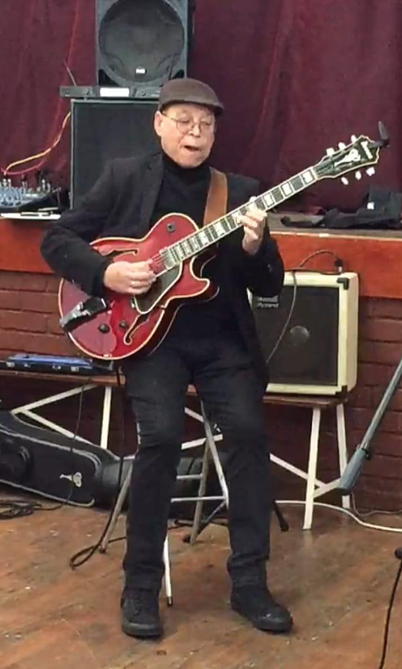
Alvin Dyers . . . one of four Cape Town musicians who died recently but not before leaving their mark in their hometown.
24 September 2024
It’s Heritage Day today, reason enough to celebrate – appropriately – and remember where we come from, the road we have travelled, the people who taught us and to whom we owe so much in terms of shaping us
The day has morphed into Heritage Month, so people have much longer to arrange all the associated activated. But truth to tell, a lot has happened over the last four weeks to put a damper over any celebration.
In pure music terms, too many people have died just recently leaving a pall of gloom over the local entertainment scene. Jazz guitarist Harry Peacock was farewelled in early September, so was drummer Makaya Ntshoko and guitarist Alvin Dyers.
And a few days ago, we learned of the passing of Timmy Kwebulana, in recent times known as an actor but in the very early days an accomplished bassist and drummer.
What is it that ties all these musicians together? Well, all four have their roots in the Cape Town music scene and in the case of Peacock, Ntshoko, and Kwebulana (all octogenarians) those roots go back to the early to mid ’60s. They were starting out at the same time as Abdullah Ibrahim (then Dollar Brand), Johnny Gertze, Louis Moholo, the Ngcukana family, and Winston Mankunku among others. All went on to become jazz household names here.
Alvin Dyers’ journey started a little later, around 1970 when he, along with brother Errol, started in a group called Sacred Legion. The band did not play jazz at that stage, but it wasn’t out and out pop either. They just played a better brand of music than other cover version bands were doing at the time.
All four of these talented musicians were connected, however tenuously. Ntshoko and Kwebulana were an integral part of jazz in Langa in the early Sixties when there was a buzz in the township about the genre and there is no doubt that they would have played together when jamming was the in thing among musicians. From one week to another you would be playing with different artists.
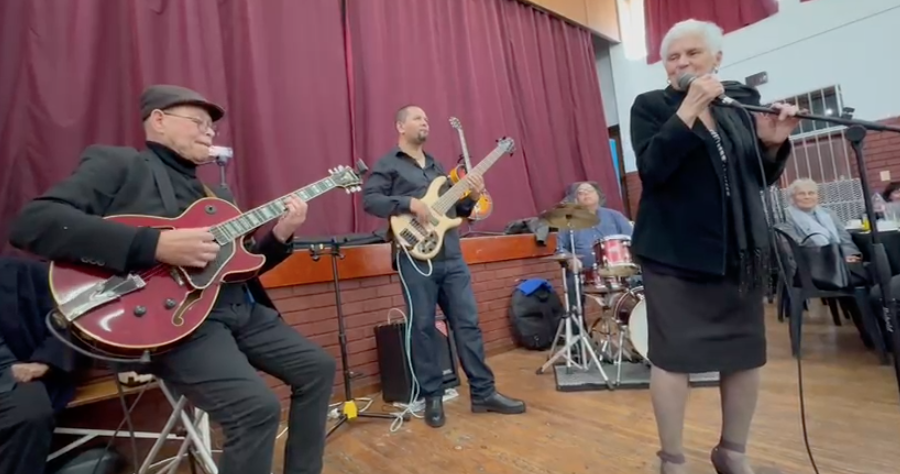
Alvin Dyers backing Zelda Benjamin at one of his last gigs at the wake of Harry Peacock. Alvin died the next day.
Peacock never played with Ntshoko but did reveal in Lar Rasmussen’s book, Jazz People of Cape Town, that Ntshoko was a guest at his wedding “and stayed the night”.
Dyers would probably not have played with Kwebulana or Ntshoko because the former turned his skill to acting and the latter left South Africa in the mid ’60s to play in Europe and made his home in Switzerland. His path would have crossed with Peacock because from the ’80s onwards Dyers’ style segued to the jazz field where Peacock was already a sought-after jazz guitarist.
The poignancy is not lost on people who attended Harry Peacock’s wake. Alvin was the guitarist who filled Harry’s boots in the “one last gig” Harry craved before he died. Family friend Miles’ October said 86-year-old Harry was keen on having a last gig with the likes of his regular group, Gary Hendricks (piano), Roy Davids (drums) and Valentino Europa (bass) with jazz veteran Zelda Benjamin on vocals.
“Harry died before we could arrange it. Harry would have enjoyed it that we got the group together with Alvin standing in at his wake. Sadly, that was Alvin’s second last gig. He played later that day at his regular gig and died the following day.”

Harry Peacock, far right, with some of the regulars he played with over the years . . . Roy Davids, Valentino Europa, Ebrahim Khalil Shihab and Zelda Benjamin.
Harry was typical of so many of our veteran musicians. He played for more than 60 years, never gave up his day job as an upholsterer and never made it into a recording studio to leave behind some sort of legacy. But he is part of our heritage.
Alvin did fare better in that regard. He played and recorded briefly with Pacific Express. He recorded his own CD called Wesley Street and, like brother Errol, established himself as a respected and much-liked musician. He also turned his hand to mentoring younger students.
Much of Alvin’s later years is out there but not so much of Alvin the young guitarist who was finding his feet in nightclubs around Cape Town in the early ’70s. One muso who knew him back then was bassist Michael van Eden.
He reflected on the young guitarist he first heard in a nightclub in Wynberg.
“I’m proud, blessed and honoured to have shared the stage with this wonderful musician,” Michael said. “The first time I saw Alvin was when he was with Sacred Legion at the Brothers night club in Wynberg, playing with his brother Errol.
“Errol did most of the solos with Alvin backing him. When Sacred Legion broke up the brothers kept themselves busy with different projects.
“Alvin eventually joined our group, Buttercups, around 1972. His style fitted in perfectly. He was a very quiet guy on stage, but his playing kept everyone around quiet too. The only problem was when he took a solo, he got carried away and we had to gently interrupt his solo.
“After the Buttercups. Alvin, Basil DuPont and I joined up with Benefit. It was just a new experience for us.
“We lived close to each other in Hanover Park, and we would hang out together. There was no indication at that stage to what heights he would rise in later years. There are sooo many stories to tell, some funny some not to mention.
“When I left Benefit, he carried on and when they broke up, he started working with many musicians in the jazz field. Later, I was shocked but not entirely surprised that he was teaching music.
“It is sad that that soft spoken, always ready to lend a hand or advise people with anything is no more.”

Jazz drummer Makaya Ntshoko, originally from Langa but settled in Switzerland in the Sixties. He played with some of the top names in the jazz world.
Ntshoko, born in 1939, was probably better known in Europe than his hometown. He left South Africa in 1963 to join pianist Dollar Brand (who later change his name to Abdullah Ibrahim when he converted to Islam), bassist Johnny Gertze and singer Bea Benjamin. He never really came back. Switzerland was his base and home up until his death.
He played with some of the world’s top jazz musos, in the main hornmen like Ben Webster, Joe Henderson, Dexter Gordon, Roland Kirk, Joe McPhee and Pepper Adams and formed a group called Makaya & The New Tsotsis.
His early days in Langa were where his prodigious talent was recognised. It came to Dollar Brand’s notice and the next thing he was playing with Dollar and Johnny Gertze. Dollar whisked him off to gigs in Jo’burg and not long after they were playing Europe. He never came back but the old-timers in Langa never forgot him.
Before he left, Ntshoko was part of a somewhat loose group called the Jazz Epistles which included the likes of Hugh Masekela, Kippie Moeketsi, Jonas Gwanga (all from Jo’burg) and Dollar Brand, Johnny Gertze (and Ntshoko) from Cape Town.
In their short-lived existence around 1960, the group recorded, on the Gallo label, what is considered to be the first jazz album by black artists, titled Jazz Epistles Verse 1. The album featured eight tracks, all composed by various members of the group.
After the stint in Jo’burg with the Jazz Epistles, Ntshoko came back to Cape Town and formed the Jazz Giants with Dudu Pukwana and Johnny Dyana. It did not last long because he got the call to join Dollar Brand in Switzerland.
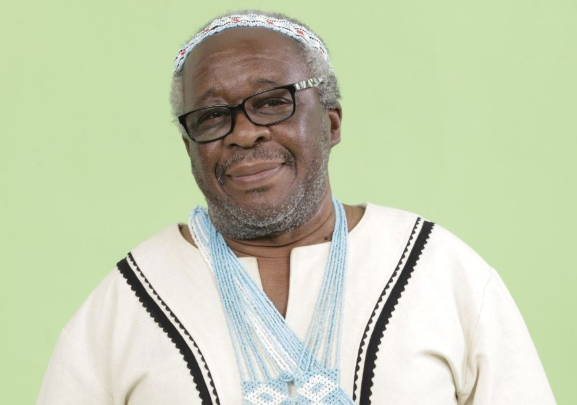
Actor Timmy Kwebulana who started out as a jazz drummer in Cape Town in the Sixties but ended up being an actor on stage and television.
Timmy Kwebulana’s music career flourished briefly in the ’60s when he was part of the vibrant jazz scene in Langa that spawned. He could play the bass, but he opted instead to focus on the drums. However, it was a crowded field of top drummers in the area with percussionists like Louis Moholo, Max Dyamani (Diamond) and Makaya Ntshoko.
He turned his hand to acting and found roles in theatre performances and later TV. He never really went back to his music roots. But he was part of the generation of musicians on whose shoulders the younger generations.
So, as you celebrate Heritage Day today, reflect for a moment to mourn the sad losses we have endured these past few weeks. These performers deserve nothing less.
 MUSIC LEGENDS OF CAPE TOWN