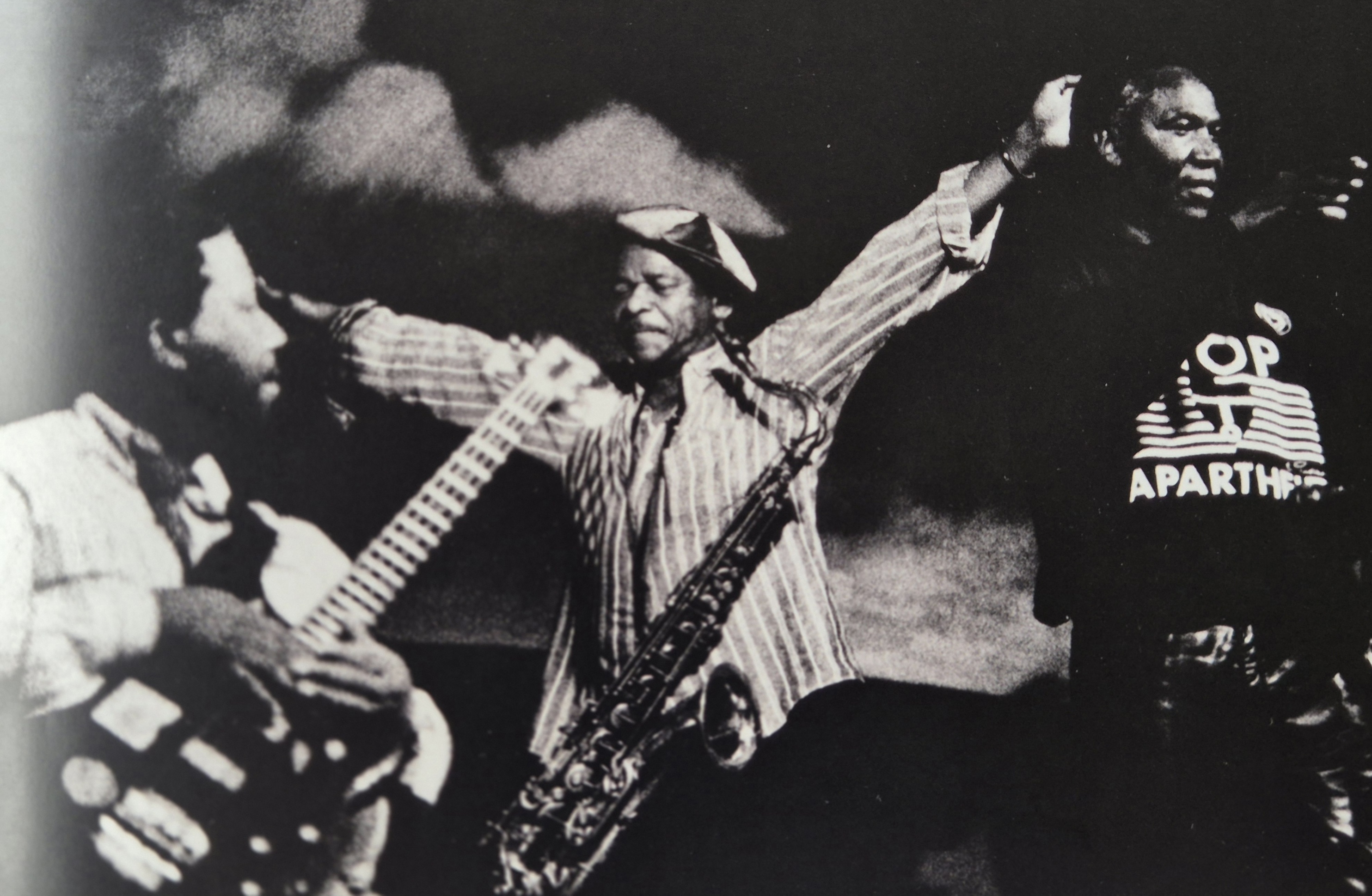
Cape Town-born jazz giant Winston Mankunku Ngozi acknowledging the adulation of his legion of fans at a Struggle gig back in the day. [Photo reproduced from photo-journalist Rashid Lombard’s book, Jazz Rocks.]
“Mankunku’s playing . . .” It was said reverentially, almost in hushed tones tinged with awe.
That was the scenario played out times without number in Cape Town in the late ’60s when jazz lovers sought a place to chill to the cool sounds of mainstream jazz.
Jazz had been in a bit of a decline around then. The buzz of the early to mid-’60s when a young Dollar Brand sparked interest in be-bop and cool jazz. The aficionados hung out in District 6 venues like he Naaz, Zambezi and Ambassadors. Then came February 11, 1966. The “fun police”, in the form of the apartheid state, declared D6 a white zone and shipped thousands to the desolate sands of the Cape Flats,
As the area turned into a wasteland, so the sounds of jazz became muted, with the likes of the Ngckunas, Schilders and the Moses brothers doing the heavy lifting to keep the art form going. Many of the top jazz players disappeared into the white clubs to earn a living.
And then came Winston Monwabisi Mankunku Ngozi – or just Mankunku. Dollar had decamped for Europe and some seriously talented players had gone to the Continent with the Dixies. The local scene needed a new drawcard and Mankunku was that man.
The young musician with the searing sax breathed new life into an almost moribund jazz scene.
Venues started opening up, particularly in the Athlone area . . . The Beverley Lounge, the Goldfinger offering the fans an opportunity to listen to live jazz in a club rather than “house scenes” where DJs played funky jazz like Herbie Mann’s Memphis Underground or Jimmy Smith’s Got My Mojo Workin’. Nice to dance to, but ummm, not really jazz.

Mankunku blowing up a storm.
Mankunku brought with him the raw sounds of a John Coltrane and infused it with his African roots. He stirred up the scene in no small measure.
But Mankunku was anything but an overnight sensation. He was born in Retreat on 21 June 1943 and even at a tender age showed a penchant for all things musical. He was tickling the ivories before the age of 10, then turned his hand to the clarinet and trumpet. Before he turned 20, he switched to the alto and tenor saxophones.
In 2009, on this day, October 13, at the age of 66, Mankunku’s health failed him and he passed away leaving behind a legacy deserving more acknowledgement than has been forthcoming. This, in some small way is the reason for this tribute, 16 years after his death.
His story hasn’t been all that well documented apart from the reference in most places on the web about his birth in Retreat and a chronology of his recordings. Yet there are people who place Mankunku high up in the pantheon of South African jazz musicians.
The late photo-journalist, Rashid Lombard, who was the driving force behind the establishment of the Cape Town International Jazz Festival, put together a book, Jazz Rocks, of his pictures of the musicians he snapped over the years. He dedicated the book to his “friend and teacher Winston ‘Mankunku’ Ngozi.
In the dedication Rashid wrote: “We first met in the late ’60s and as I got to know him, softly spoken with that passion shining underneath, he introduced me to the music of John Coltrane, Miles Davis and all the other greats of that era. It was through Winston that I began to understand the language of jazz and to appreciate how expressive and generous Bra Winston was. He inspired countless audiences and artists with the beautiful phrases from his horn. I don’t think a voice as unique as Winston’s can ever really be forgotten.”
I too first met Mankunku in the late ’60s as a budding music journalist chasing a story. He didn’t say much to me – or anybody – but he was so articulate with his instrument.
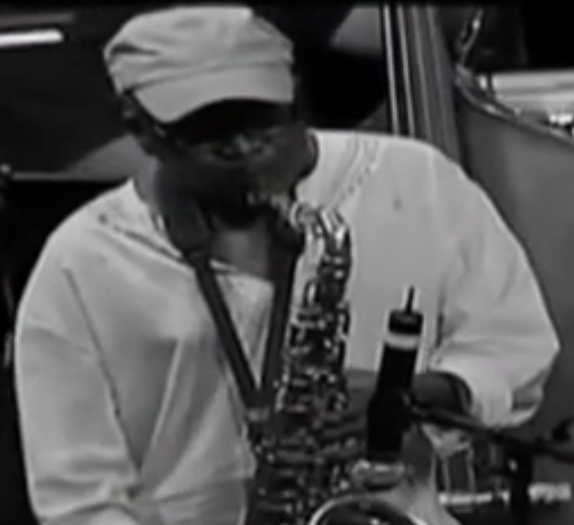 Mankunku played with most of the top bands back in the ’60s but never long enough to become a permanent member. That was pretty much the nature of the beast back then. Guys gigged wherever they could earn a few bucks. Those early days saw him playing in groups like the Soul Men, Swingettes, Crusaders alongside local heavies including the Schilders (Tony, Chris and Richard), Cliffie and Basil Moses, Merton Barrow, Midge Barney Rachabane and Victor Ntoni.
The Mankunku appeal gained momentum after he recorded his first album, Yakhal’ inkomo, in 1968 with pianist Lionel Pillay, bassist Agrippa Magwaza and drummer Early Mabuza. Almost 60 years later, the song Yakhal’ inkomo is up there with Abdullah Ibrahim’s Mannenberg in terms of national popularity.
Mankunku’s music has had an impact on so many lives and no one knows it more so than McCoy Mrubuta, one of the country’s leading saxophonists at the moment.
“Many of us were influenced by him, there’s no doubt about that,” Mrubuta said. “As a professional, he was on another level. I would witness him practise non-stop which encouraged me to do the same thing when I got my first horn. I would forget about food and practise all the time. Winston was a very dedicated musician. He was practising even when he was on the top of his game. So many of us are trying to emulate him.”
Mrubuta, as a teenager, had a front-row seat in watching the Mankunku legend grow.
“My family moved from Langa to Gugulethu in 1975. My neighbour, would you believe it, was Bra Winston,” Mrubata said. “I always knew, growing up, that Winston was a jazz legend. Even as a toddler I heard his music. I was one of those privileged people who had bands rehearsing opposite our house. It was jazz music man, either the band playing itself, or records playing the iconic Yakhal’ inkomo or the album Spring, that he recorded with Khalil Ebrahim (Chris Schilder) and Monty Weber.

One of South Africa’s leading saxophonists, McCoy Mrubata, once a young neighbour of Mankunku, was influenced by the jazz giant’s playing. Photo sourced from social media
“The first time I actually heard him on stage was at a civic hall in Gugulethu. It was overwhelming. I shared a stage with him on occasion when he pitched up for an impromptu jam with my band.
“When I finally worked with him in Durban in the early ’90s on a professional level, it was one of the best moments knowing that it was a formal arrangement. Over the years we played together at a number of places around the country.
“In the early 2000s, the Jazz Foundation put together a big band for him. They commissioned people to arrange his music. I was part of that big band. It was so beautiful.
“He used to say to me ‘Cookie – he always called me that – I don’t know how to teach; I learnt from others; just watch me play, observe and listen’. And that’s what I did. He was kind enough to just let me watch him do his thing. You can have your own sound but you can tell, this person has listened to Mankunku.
Mankunku’s career, like most musos from ’60s and ’70s, was almost nomadic in nature as they drifted from band to band and gig to gig. Then in the mid-’70s a degree of stability arrived in the form of pianist Mike Perry.
“The first time I really heard him live was at the Heerengracht Hotel,” Perry recalls. “I had heard some of his work and felt very lucky he accepted the gig with my trio very early in my career.”
Mankunku did not immediately join Perry’s outfit which had touring commitments but when the pianist came back, he renewed his musical and personal friendship with the gun saxman.
“This [relationship] was to remain in place for two decades and four albums till after the M<illennium, despite me doing eight months a year for eight years playing solo piano in Switzerland.
“We were both a bit sentimental about our long journeys and how we were coming to an end, Winston’s declining health becoming a factor. I would not be present at the recording of his last album, Abantwana be Africa, in Joburg featuring some fine musos like Herbie Tsoali on bass, and Andile Yenana on piano.
“Our career-defining album, Jika, meaning ‘Change’ and containing a strong but of necessity subtle protest content, was recorded mainly in London in 1976. It was our most successful collaboration and arguably our best sound quality and mix wise (we took a lot of time with good engineers).
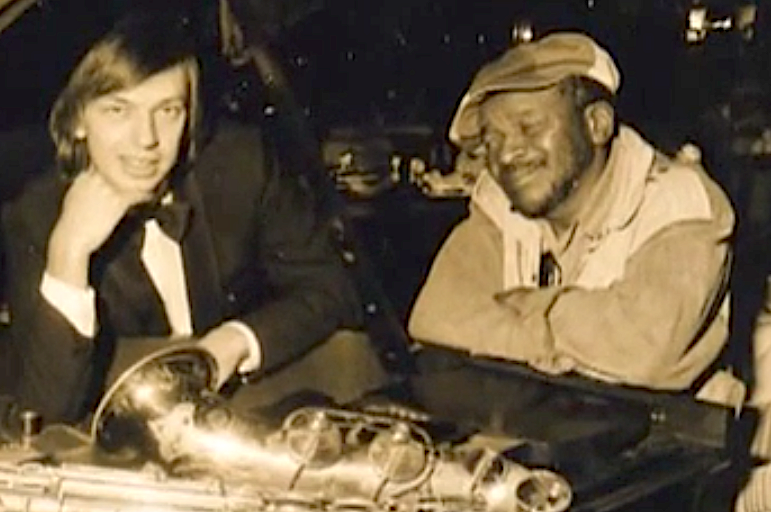
Pianist Mike Perry and Winston Mankunku Ngozi sharing a moment in the early days of their long relationship.
“The recording was the reason we formed our partnership, Nkomo Records, to avoid record company exploitation which Winston had already suffered from. He didn’t get paid by Gallo Africa for his hugely successful album, Yakhal’ inkomo. I had been totally enraged when I heard the full story which he only told me when we had known each other for some time. It should have made him a wealthy man!
“In my opinion he was by far SA’s finest tenor player and also the composer of some memorable tunes. All musicians he played with, locally and internationally, recognized his unique talent and mastery, not only of SA jazz but also the American tradition where his knowledge of standards and styles was nothing short of encyclopaedic. His depth of emotion e.g. from sweetness to the enraged bull (the African people) being led to the slaughter will live long not just in my memory…
Mike Perry is currently writing a book documenting his journey and the role Winston “Mankunku” Ngozi played in it.
 MUSIC LEGENDS OF CAPE TOWN