


The stars who shone . . . District 6-born artists who thrilled crowds. Top left, anti-clockwise: Leslie Kleinsmith, Nisha Abrahams, Gobi Martin and Elspeth Davids.
11 February 2026
Sixty years ago, the spirit of District 6 residents was crushed when the apartheid government made official what was flagged years before – the people would be forcibly evicted and the area reserved for whites.
On that fateful day, 11 February 1966, more than 30,000 people who made up that vibrant community at the foot of Table Mountain, faced the prospect of a bleak life on the desolate, dead wasteland that was the Cape Flats.
People died of broken hearts torn away from loved neighbours. Those who lived on had only memories to cling to. Memories kept alive by the people who brightened their lives – the entertainers.
Much is made of the politicos and writers who fought valiantly to highlight the injustice of it all. People like Dr Abduraghman and his daughter Cissy Gool. And writer Alex LaGuma. But it was the performers who lifted the spirits to ease the pain.
In 1966, variety concerts featuring the best entertainers of the area packed out the local bioscopes (that’s what they called them back then). Artists like Fatima Barnes, Chico Levy, Victor Sampson, Jerry Hector and Al Hendricks learnt the art of performing in District 6 institutions like The Star, The National and The British. As did vocal groups like the Falcons, the Rockets, the Ambrosias and the Splendours. They thrilled audiences with Strangers in The Night, Born Free and You Don’t Have To Say You Love Me . . . fabulous hits of the day.
Most of these District 6 artists have passed on but in the immediate aftermath of 11 February 1966, they sang and performed as a salve for a deeply wounded community.
The memory was also kept alive with the record-breaking stage play District 6 – The Musical in 1987 and currently a new stage play, Hanover St.
Yet, if ever the people needed to be reminded of who and what made District 6 so exciting one could only point to those entertainers who are still alive. Gobi Martin, Joe Schaffers, both well into their 80s, are still with us, as are Nisha Abrahams and Elspeth Davids, both nearing 80. And then there’s a young Leslie Kleinsmith (just over 70).
All born and bred in District 6 and all cut their teeth on the local stages. And all remember those days.
‘A longing for what was . . .’
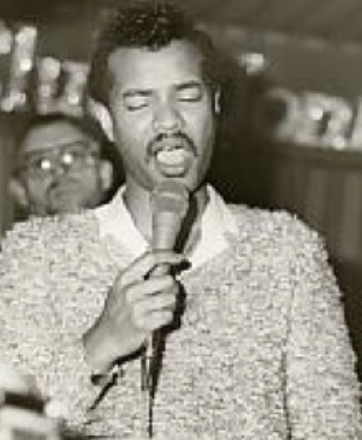
Leslie Kleinsmith
Leslie Kleinsmith was in his early teens living in Eckhard St when the news came. He has clear memories of where his life was headed back then. “I had just discovered that I could hold a tune,” he recalls. “My head was in the clouds and full of music. The forced removals were discussions for the adults. The reality of it all hit home 12 years later.
“At that time, I was living at home but often left town to go on tours up north. My parents eventually moved out in 1978. I came back from a six-month contract in Swaziland to find all the homes in the street were razed to the ground.”
Although he lived in the area, Leslie only remembers one occasion where he performed locally and that was when he was with the Big Daddy at The Avalon Bioscope.
“My mother barred me from setting foot in most of the other bioscopes like The Star, The National and The British because it was frequented by dagga [dope] smokers!
“My family, like all the families who know D6 the way we do, always speak of it with mixed emotions; with sadness, regret, heartache and a longing for what was . . .”
‘I would not like to go back to District 6. It will never ever be the same’
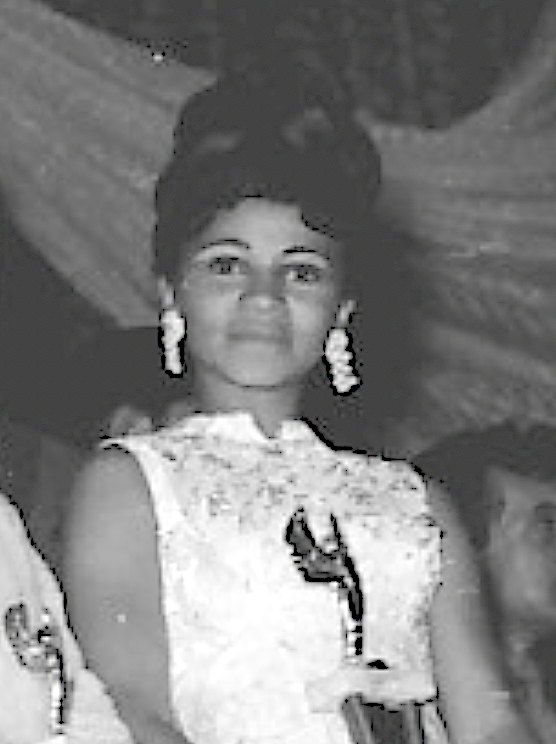
Nisha Abrahams
Nisha Abraham, born at No 74 Stone Street, was a huge drawcard as a songbird in the ‘60s and still struts out on stage today.
She sang at the all the movie houses in District 6 in those days as well, and, as she recalls, “including the National Bioscope where we had the Early Morning Housewives Show”.
The Abrahams family only moved out of D6 in 1977 but rejected the government’s offer of a house in Hanover Park.
“We were given a house in Hanover Park, but we refused to go there and found a place a little further away in Primrose Park. My mother absolutely refused to take us to Hanover Park.”
Nisha still has strong feelings about living and performing in her old neighbourhood. “As artists in District 6 we were very close. We were friends on stage and off stage. We were actually like family in those years; very, very close, we could live with one another.
“I will always cherish the memories of singing in the Star Bioscope. You had to deliver top class performances there. If not, those audiences let you know quick smart about your performance. If you weren’t good, you would be ‘removed’ from the stage.
“I would not like to go back to District 6. It will never ever be the same. I was very upset when we had to leave because we all lived like family. We actually cared for one another, not as neighbours but as family.”
The sound of District 6 was in his blood and bones
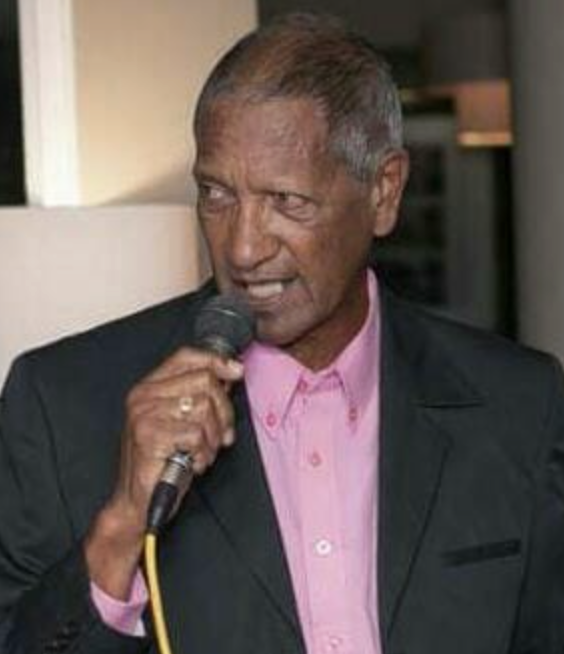
Joe Schaffers
Singer Joe Schaffers is the quintessential kid who was born in District 6 and grew up with music all around him. The sound of District 6 was in his blood and bones.
“I was born in Bloemhof Flats in 1939 and music played a big part in my life,” he says. “There was always music in our home whether it be the radio, records, or parents and aunties and uncles singing,
“My dad, uncle and my brother Louis played our piano. In the Flats the sound of music was everywhere. If three or four guys were standing in the entrance to one of the blocks, there would be a song going. If there were guys hanging around on the corner, they would break into one of the popular tunes of the day.
“The news that District 6 was going to be for whites only was at first treated with scepticism because how can they move all of us until reality and power or the apartheid monsters really hit home and everything that goes with it.”
‘Mom covered up the seriousness of being moved out of D6’
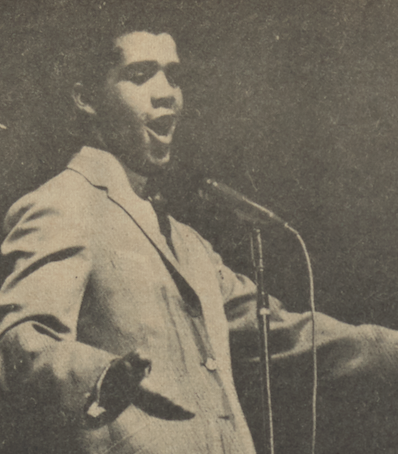
Gobi Martin
Gobi Martin was the “golden boy” of performers in the mid-60s. He was the star in District 6. Now 87 years old, and living in Delft, the crooner still remembers clearly those days growing up in William St and schooling at George Golding Primary.
“At Golding I had my first performance when I sang Mame,” he says. “It is etched in my mind.
“As children my Mom covered up the seriousness of being moved out of D6. She got us excited about the move, by telling us that we’ll have our own rooms whereas we all slept in one room, my mom and seven kids. She went went to look for a house before we were forced to leave. Then she was told we would be given a house in Bishop Lavis.”
‘I lived next door to a smokkie . . . that’s just how things were’
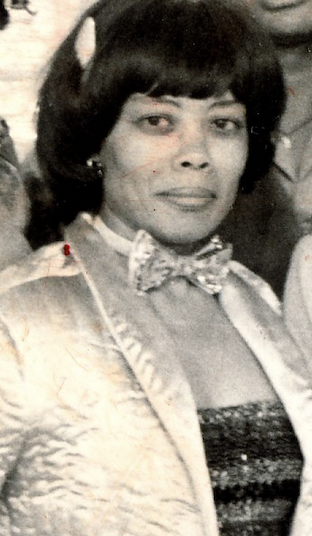
Elspeth Davids
Elspeth Davids, (now Tashnika after converting to Islam) was one of the leading female performers in District 6, both as a soloist and with the popular vocal groups of the time.
She lived at 14 McKenzie Street and one of her fondest memories of living in the area, was attending Trafalgar High in 1959 where she performed in school plays with another D6 luminary, saxophonist Basil Coetzee (a Bloemhof Flats boy).
‘I had the pleasure of living next door to the local ‘smokkie’ (shebeen), run by Tamatie and his wife Connie,” Tashnika recalls. “That’s just how things were in D6.”
As for performing in D6, she did the rounds of all the bioscopes – the Star, Avalon, British and National. “Where there was a cinema, there was always a variety show and I was backed by some of the top groups of the day, like the Big Beats.
“One of the nice things about living in the area was that one got to listen to the lovely sounds of the Malay Choirs and the coon troupes as they prepared for the end-of-year competitions.”
In the early ‘70s, the knock came at the door and pretty soon they were being shipped out to Hanover Park on the desolate Cape Flats.
“There’s no sadness or regrets,” she says. “I’ve moved on.”
Blog Editor’s note: No AI platform was used in the preparation of this article. Some photos have been accessed from social media.
 MUSIC LEGENDS OF CAPE TOWN